
Get a valid Emotional Support Animal (ESA) letter in California. FHA-compliant, legally recognized for housing, fast online approval.
Starts from $129

An emotional support animal (ESA) in California benefits with important housing protections under the Fair Housing Act. But, they have restricted public access and are no longer entitled to free air travel. They are now recognized as regular pets by airlines.
On top of that, California enforces a strict “anti-letter mill” law to eliminate fraudulent ESA letters and online “letter mills”.
If you are planning to request an ESA accommodation or already have an animal that supports your emotional well-being, it is critical to understand how California law works, what rights you actually have, and how to qualify legally without risking penalties.
Under California Health & Safety Code § 122318 (AB 468), effective from January 1, 2022, licensed mental health professionals must establish a minimum 30-day therapeutic relationship with a patient before issuing an emotional support animal (ESA) letter.
California law also strictly prohibits falsely representing an animal as a service animal. Under California Penal Code § 365.7, service animal misrepresentation is a misdemeanor offense, punishable by up to six months in jail, a fine of up to $1,000, or both. Individuals or businesses that sell or promote misleading ESA-related products may face escalating civil penalties: $500 for a first violation, $1,000 for a second violation, and $2,500 for third and subsequent violations.
You can avoid legal and housing complications by working only with California licensed mental health professionals who fully comply with the state’s 30-day relationship requirement. Californiaesapetletter.com provides you easy access to licensed mental health professionals in California fully complied with the state’s 30 day relationship requirements.
Understanding California’s ESA laws can feel overwhelming, especially when a landlord is requesting documentation or when concerns about “fake ESA letters” arise.
This guide breaks down California ESA laws in simple terms so you can move forward with confidence.
Under California law, the terms “emotional support animal” and “emotional support dog” are formally defined in the California Health & Safety Code.
An emotional support animal is a companion animal that provides therapeutic benefit to an individual with a mental or emotional disability, but it is not trained to perform specific tasks related to that disability.
Category | Emotional Support Animal (ESA) | Service Dog |
Training requirement | No specialized task training required | Professionally or individually trained to perform specific disability-related tasks |
Public Access Rights | No access to public places under the ADA | Full public access rights under the ADA |
Housing Protections | Protected as a reasonable accommodation under California and Federal fair housing laws | Fully protected under California and Federal fair housing laws |
Air Travel Rules | Classified as a pet under current airline regulations | Recognized as an assistance animal under federal law |
Housing Fees | Exempt from pet fees, deposits and pet rent | Exempt for all pet related fees |
Works exclusively with California-licensed mental health professionals
Fully complies with the AB 468 mandatory 30-day therapeutic relationship rule
Secure and timely digital delivery of ESA documentation
100% money back guarantee
Why This Is Important:
California’s AB 468 bill (now codified in the Health & Safety Code) targets “letter mills.” Any ESA letter issued too fast and by an out-of-state provider without a proper clinical relationship does not meet California’s legal standards. Landlords or housing providers can legally deny these ESA letters.
Below are the required steps to obtain a fully compliant ESA letter in California:
Your ESA letter must come from a licensed healthcare provider in California. The clinician’s professional credentials and licensing information must be clearly listed in the documentation.
California law requires a minimum 30 day therapeutic relationship between you and the healthcare provider before issuing an ESA letter. This relationship must involve genuine clinical care not a single visit or same day approval.
Your clinician must conduct a proper evaluation to determine whether an emotional support animal is clinically appropriate for your condition. California law does not recognize ESA letters issued solely from online quizzes or automated screenings.
A valid California ESA letter should include:
The clinician’s license type, license number, and issuing jurisdiction
The letter issued date
A clear statement confirming your need for an ESA as a reasonable housing accommodation
Licensed state professionals recommend emotional support animals as part of a broader, personalized treatment plan not as standalone certifications.
Under federal or California law, you do not legally require ESA registrations, certificates, and ID cards. These documents do not create any legal rights. California law also requires sellers of ESA tags or vests to disclose that these items do not grant service animal privileges. Sellers who mislead consumers may face fines of $500 for a first violation, $1,000 for a second, and $2,500 for subsequent violations.
California Law Alert:
AB 468 (effective January 1, 2022) mandates following requirements before issuing an ESA letter:
Full license disclosure in ESA documentation
The law also requires sellers of ESA related gear to provide written notice that emotional support animals are not service animals.
Concerned About the 30 Day Requirement?
Begin your therapeutic relationship early. Your ESA letter will be ready and is valid when you need housing.
| Features | ESA Letter | ESA Letter + ID Card |
|---|---|---|
| Price | $149 / Per Pet | $199 / Per Pet |
| Housing Coverage | Covers most housing arrangements | Covers most housing arrangements |
| Legal Compliance | Compliant with the Fair Housing Act | Compliant with the Fair Housing Act |
| Housing Recognition | Legally recognized for housing needs | Legally recognized for housing needs |
| Validity | Valid for 1 Full Year | Valid for 1 Full Year |
| Customer Support | 24/7 Support Included | 24/7 Support Included |
| Delivery | Instant Digital Delivery Upon Approval | Instant Digital Delivery Upon Approval |
| Plastic ID Card | ❌ Not Included | ✅ Included |
| Physical Hard Copy | ❌ Not Provided | ✅ Provided |
| Best For | Quick digital ESA approval | Full ESA package with ID & hard copy |
| Get Your ESA Letter | Get Your ESA Letter & ID |



Housing providers including landlords, homeowner associations (HOAs), university housing, and shelters should provide reasonable accommodations for individuals with disabilities who rely on an emotional support animal. This obligation applies even in properties with no pet policies. In California, ESA housing protections follow the standards set by the Federal Fair Housing Act.

California housing providers cannot impose blanket restrictions based on breed, size, or weight. Any denial must be made on credible evidence that the specific animal poses a direct safety risk or would cause substantial physical damage that cannot be reasonably mitigated.
If your disability or need for an ESA is not readily apparent, a housing provider may request reliable documentation confirming your need for an emotional support animal. However, they cannot ask for details about your medical diagnosis or demand access to your health records.
A valid ESA letter issued by a California-licensed mental health professional is sufficient. Online ESA registrations or certificates by themselves don’t prove need for an ESA accommodation.
Landlords may not charge pet rent, pet deposits, or other pet related fees for emotional support animals. But, tenants remain responsible for actual damage caused by the animal, excluding normal wear.

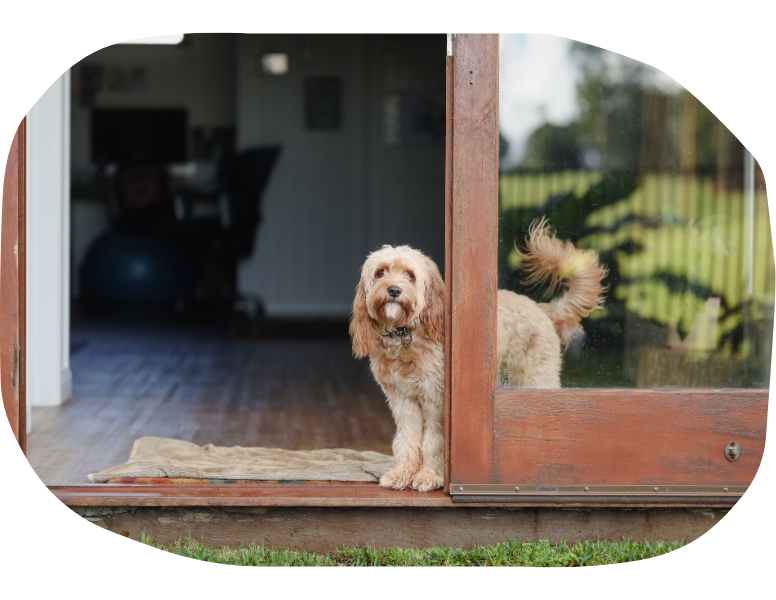
A landlord or housing provider may deny an ESA accommodation only if:
The request would create an undue financial or administrative burden
Public Places (Stores, Restaurants, Hotels):
Emotional support animals do not have public access rights under the Americans with Disabilities Act (ADA). As a result, businesses such as retail stores, restaurants, and cafes may legally treat ESAs as pets. Entry is entirely at the discretion of the business owner. Only locations that choose to be pet friendly are required to allow animals. Hotels follow similar rules. Unless a hotel has an established pet friendly policy, they may deny access to emotional support animals.
Air Travel:
According to the Department of Transportation’s 2020 rule, airlines do not recognize ESAs as service animals. In the past, ESAs could travel in the aircraft cabin at no additional cost, but this is no longer the case.
Today, most airlines classify ESAs as standard pets. This means:
Airline policies vary. So travelers should always review specific requirements before booking.
State Parks, College Campuses, and Other Facilities:
Rules for ESAs in state parks, universities, and other facilities can vary widely. In most cases, you are not allowed to bring ESAs in indoor, non-housing spaces unless the facility allows pets. But, under fair housing law, campus housing must accommodate ESAs when proper documentation is provided.
What This Means for You:
California’s Fair Employment and Housing Act (FEHA) allows assistive animals including ESAs to be considered as a reasonable workplace accommodation in certain situations.
Employers may set minimum standards for support animals in the workplace including the animal to be housebroken, respond to basic commands, behave appropriately in a professional environment, and pose no safety or health risk to others.
Employers may address approval if the animal exhibits disruptive behavior during the first two weeks.
Approval of an ESA at work is at the employer’s discretion and is determined through an interactive process. An ESA may be permitted if it is necessary to help the employee perform essential job functions or access equal employment benefits, and if allowing the animal does not create undue hardship for the employer.
College and University Housing:
Student housing at California colleges and universities falls under the Federal Fair Housing Act (FHA). As a result, ESAs receive accommodations as reasonable disability support. But, ESA access is limited only to student residential spaces.
Universities may remove an animal that poses a health or safety risk, or interferes with institutional programs.
Typical ESA Approval Process for Students:
Procedures vary by institution. Most California schools follow a similar approval pathway as follows.
California Universities With Established ESA Housing Policies
University of California, Los Angeles (UCLA):
University of California, Berkeley (UC Berkeley):
Contact: housingaccommodations@berkeley.edu
University of Southern California (USC)
Contact: Office of Student Accessibility Services (OSAS)
Stanford University:
Federal and State Housing Protections:
Veterans living in California are entitled to the same Fair Housing Act (FHA) protections as all other residents when it comes to emotional support animals. California’s Fair Employment and Housing Act (FEHA) offers expanded protections for veterans with disabilities. Veterans can request ESA housing accommodations just like any other California resident as long as a qualifying mental health condition is properly documented by a licensed healthcare provider.
VA Mental Health Services and ESA Letters:
California veterans can access mental health care through the U.S. Department of Veterans Affairs (VA) healthcare system. VA mental health professionals licensed in California may issue ESA letters that comply with both the Federal Fair Housing Act and California’s AB 468 requirements, including the mandatory 30 day therapeutic relationship.
ESAs are not permitted on VA facility grounds although VA mental health providers may issue ESA documentations. Only trained service animals are allowed in VA buildings and medical facilities.
Key Information for Veterans:
VA Facilities Offering Mental Health Evaluations in California:
West Los Angeles VA Medical Center
11301 Wilshire Blvd., Los Angeles, CA 90073
(310) 478-3711
Offers comprehensive behavioral health and mental health services
3350 La Jolla Village Drive, San Diego, CA 92161
(858) 552-8585
Provides full mental health services and outpatient care
Sacramento, CA
Offers comprehensive mental health services for veterans in Northern California
5901 East 7th Street, Long Beach, CA 90822
(562) 826-8000
Provides mental health and psychiatric care services
11201 Benton Street, Loma Linda, CA 92357
(909) 825-7084
Offers mental health counseling and support services
Additional Support Resources for Veterans:
No. California does not have an official emotional support animal registry and neither does any other state. Websites that claim to “register” or “certify” ESAs do not provide any legal recognition and are often misleading.
In California, the only valid documentation for an emotional support animal is an ESA letter issued by a California-licensed mental health professional who has established a minimum 30 day therapeutic relationship, as required under AB 468. No registration, ID card, or certificate can replace a compliant ESA letter.
No. Under the Federal Fair Housing Act, California landlords are not allowed to charge pet deposits, monthly pet rent, or other pet related fees for emotional support animals. But you are financially responsible for any actual damage caused by your ESA beyond normal wear.
No. Emotional support animals do not have public access rights in California. Only service animals are allowed in public spaces under the ADA. Falsely presenting an ESA as a service animal in order to gain access to public places is a misdemeanor under California Penal Code § 365.7 and can result in up to six months in jail and/or a $1,000 fine.
No. Since 2021, airlines are no longer required to accept emotional support animals under updated Department of Transportation regulations. Most carriers now treat ESAs as standard pets, meaning they are subject to pet travel fees, size restrictions, and carrier requirements. If you need to travel with an animal for emotional support, consider whether your animal qualifies as a psychiatric service dog (PSD), which has air travel protections.
Under California AB 468 (Health & Safety Code § 122318), effective January 1, 2022, licensed mental health professionals must maintain a minimum 30 day therapeutic relationship with a client before issuing an ESA letter.
This means you must have an established, ongoing professional relationship with your provider including a proper clinical evaluation of your need for an emotional support animal for at least 30 days. ESA letters issued instantly online or without this relationship are not legally valid in California.
First, make sure your ESA letter is legitimate and issued by a California-licensed mental health professional who has maintained the required 30 day therapeutic relationship with you. If your documentation is valid and your landlord still denies your request without a lawful reason, you can file a complaint with:
Under federal law, you have one year from the date of discrimination to file a complaint with HUD.
Yes. You may have multiple emotional support animals if a California licensed mental health professional determines that each animal is necessary to help alleviate symptoms of your disability. Each ESA must be documented individually in your ESA letter. Keep in mind that having an unusually large number of ESAs may not be considered a reasonable accommodation under federal or California fair housing laws.
Under California Penal Code § 365.7, falsely representing an animal as a service animal is a misdemeanor. Convictions can result in up to six months in county jail and/or a $1,000 fine. Businesses or individuals who misrepresent ESA related products such as fake certificates, vests, or registrations face escalating civil penalties including first violation: $500, second violation: $1,000 and third and subsequent violations: $2,500. This includes falsely claiming an emotional support animal is a service animal to gain access to public places.
California provides stronger workplace protections than most states under the Fair Employment and Housing Act (FEHA). While the federal ADA does not require employers to allow emotional support animals at work, FEHA may permit an ESA as a reasonable accommodation for employees with disabilities. Employers are required to engage in an interactive process to determine whether allowing an ESA is reasonable and does not create undue hardship. To request this accommodation, contact your employer’s HR department and provide proper documentation from a licensed mental health professional.
Yes. You must have a valid ESA letter from a California licensed mental health professional who has maintained a minimum 30 day therapeutic relationship to receive Fair Housing Act protections in California as required by AB 468. Without proper documentation, your landlord can legally treat your animal as a regular pet, applying standard pet policies, fees, and restrictions.
No. In California, homeowners associations (HOAs) and condo associations must follow the Fair Housing Act and the Fair Employment and Housing Act (FEHA). This means they are required to provide reasonable accommodations for your ESA, even if their CC&Rs or bylaws prohibit pets. But you must provide valid ESA documentation from a California-licensed mental health professional who has maintained the required 30-day therapeutic relationship. So, associations cannot charge pet fees for your ESA. But they may deny your request if the animal poses a direct threat to safety or would cause substantial property damage.
Licensed mental health professionals, available online. Select your city below to learn about ESA letter options in your area.
Connect with a licensed mental health professional and take the first step toward housing and travel accommodations for you and your pet.
Get Your ESA Letter →
Dr. Robert Clendenin, MD is a board-certified physiatrist with over 10 years of clinical experience in internal medicine and general surgery. He provides compassionate, patient-focused care through secure telemedicine, offering personalized evaluations and support tailored to each individual’s needs.
License Verification:
You can verify his credentials through the California Department of Consumer Affairs:
Medical License No.: C 36830
LinkedIn:
https://www.linkedin.com/in/robert-clendenin-md-9345a3bb/
Session Fee: $149 —
Includes Everything Below
If, during the evaluation, you are not deemed eligible for an Emotional Support Animal or Psychiatric Service Animal, there is no charge for the visit.
Dr. Clendenin is committed to providing clear guidance, professional documentation, and supportive care to help you navigate housing and travel requirements with confidence.

Apply online for a California Emotional Support Animal (ESA) letter. FHA-compliant, therapist approved, secure process with fast digital delivery.

©2026 All Rights Reserved.